Understanding performance before trying to improve it.
Everything I do is driven by one question:
Why do people facing similar demands perform so differently under pressure?
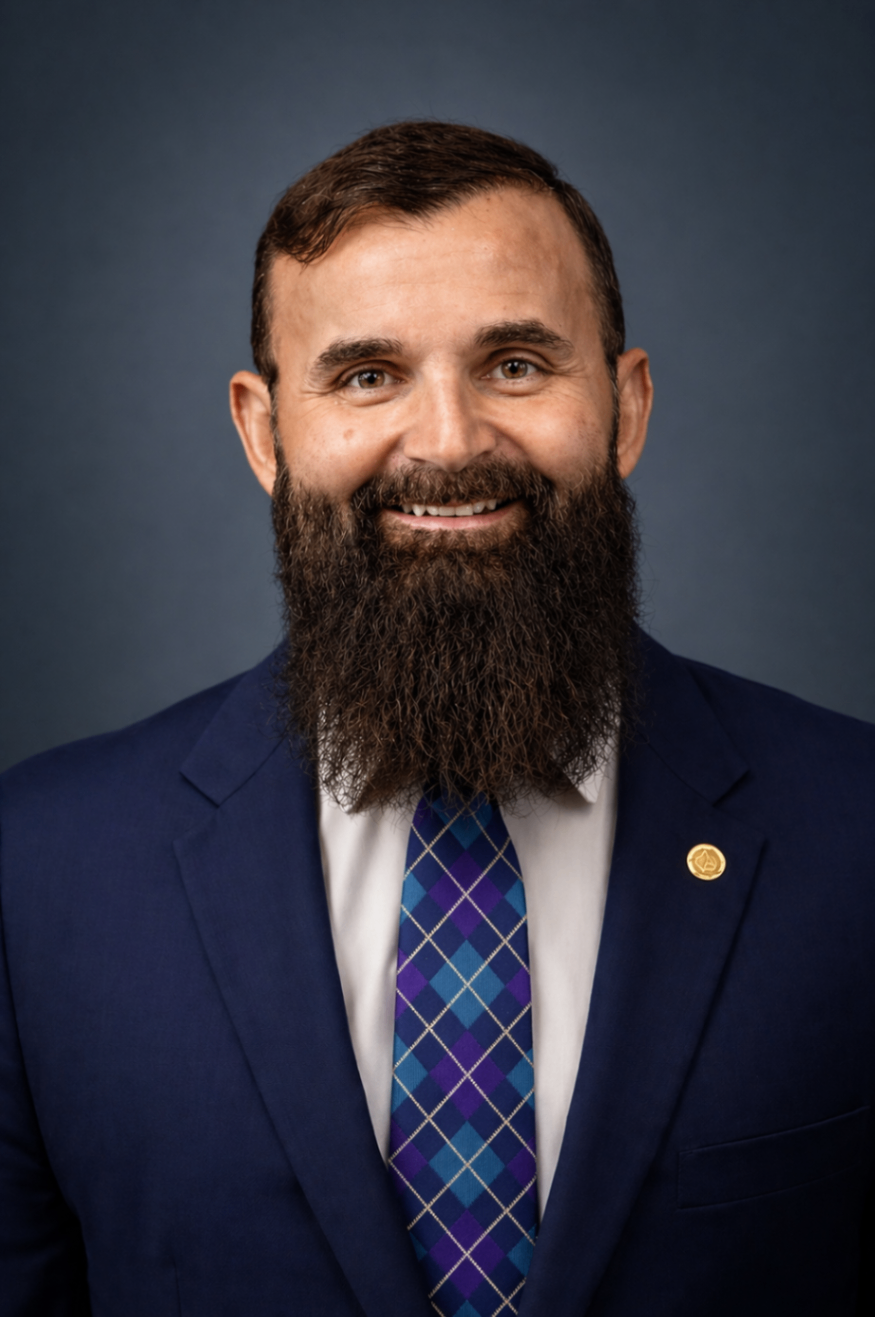
From the field to the laboratory, and back again.
I began as an athlete, training and competing with the belief that physical ability was the main thing separating good performances from great ones. That belief did not survive long.
Later, service in the Greek Special Forces made the question more urgent. In environments where demands are extreme and margins are thin, the difference between those who function well and those who do not is rarely raw talent. It is something else: the ability to stay purposeful, efficient, and flexible when pressure rises.
That observation stayed with me. It pushed me toward doctoral training at Baylor University, where I learned to study human performance with the rigor it deserves.
There, I found a scientific language for questions I had already been asking in practice: mental toughness. The term described what I had seen in sport, in military settings, and in high-stakes professional environments. It gave shape to a pattern that cut across fields.
Since then, I have worked as both a researcher and a practitioner. One role informs the other. The laboratory keeps the work honest. The field keeps it relevant.
Context before technique.
Improving performance begins with understanding. People, environments, goals, physiology, psychology, leadership, and context all shape what is possible before any intervention is selected.
No single technique solves every problem. A method that works beautifully in one setting can fail in another because the conditions are different, the people are different, or the demands are different.
The task is not to apply a favorite tool. The task is to understand the situation well enough that the right approach becomes obvious.
The right technique, in the wrong context, is not the right technique.
Nothing exists in isolation.
The body does not work as a collection of independent parts. The cardiovascular system, nervous system, endocrine system, and musculoskeletal system all operate as one integrated organism. Human performance should be understood the same way.
Exercise physiology, mental performance, leadership, healthcare, and organizational functioning are not separate domains. They are connected layers of the same system. Change one layer and the others respond.
That systems perspective is what allows the work to scale. It prevents mental performance from becoming a side program, or leadership development from becoming disconnected from the realities of stress, recovery, and decision making.
Where research and practice meet.
Research without practice eventually loses relevance. It risks becoming elegant work that few people use.
Practice without research eventually reaches its limits. It becomes habit, opinion, and repetition without improvement.
The work I do deliberately moves in both directions. Questions from the field shape the research. Findings from the research shape what happens in practice. Each side keeps the other honest.
Where the work takes me.
My work now spans several connected areas. Each one draws on the same underlying philosophy: understand first, integrate second, and only then act.
I advise organizations, speak to leadership and professional audiences, conduct and translate research, and build ventures that put these ideas into practice.
Let's build better understanding before better performance.
If your organization is ready to understand performance on its own terms, the next step is a conversation.